

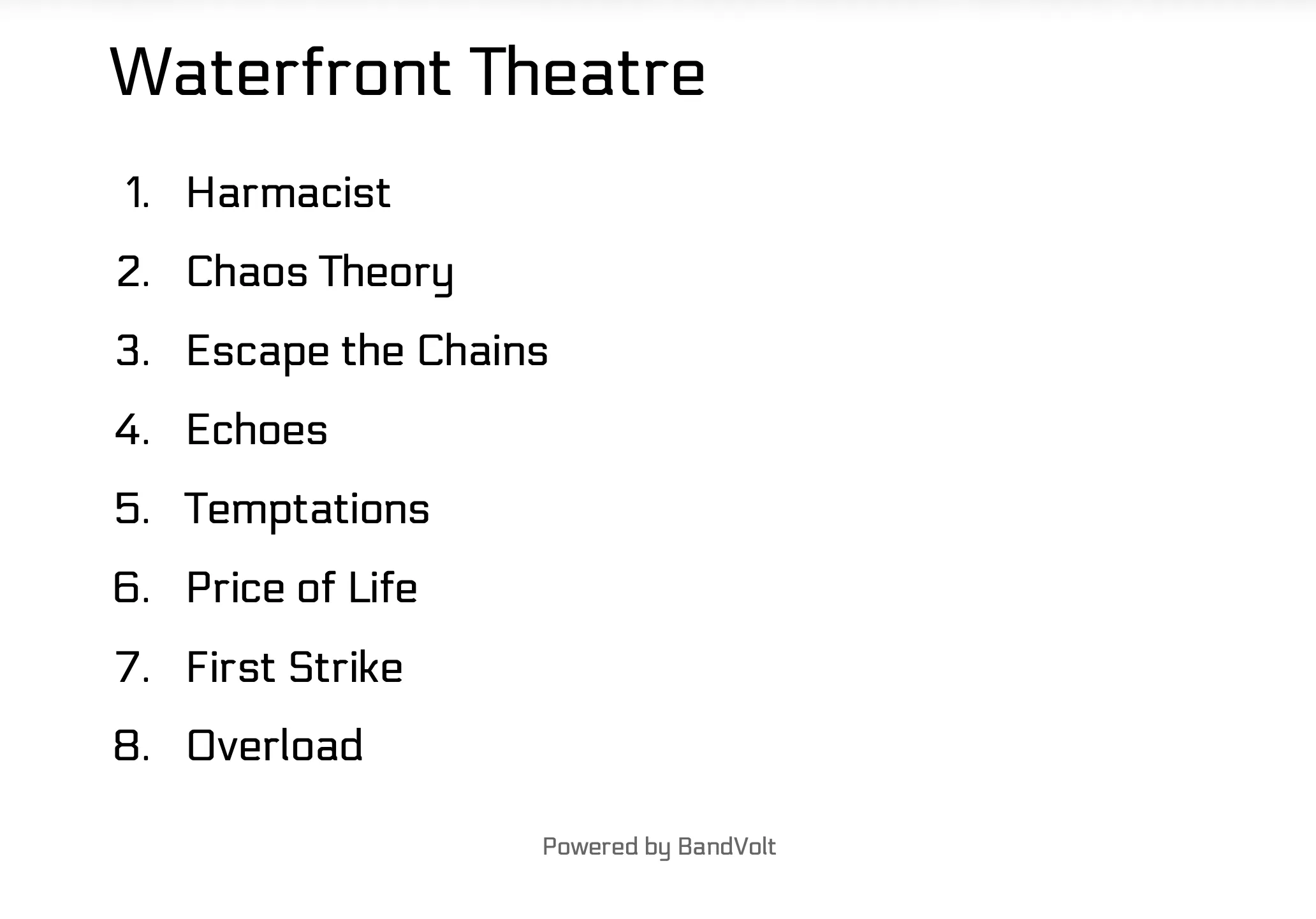
Gigs & setlists
From shared setlist to stage sheet
How to get a clean numbered setlist onto the monitors without screenshotting a Google Doc - one tap from the setlist everyone already shares in BandVolt.
Read more →Blog
Guides on tracking mix versions, giving feedback a producer can act on, building setlists that match the live arrangement, running a shared calendar, and keeping the band’s money visible to everyone - plus what we are building and why.
How to get a clean numbered setlist onto the monitors without screenshotting a Google Doc - one tap from the setlist everyone already shares in BandVolt.
Read more →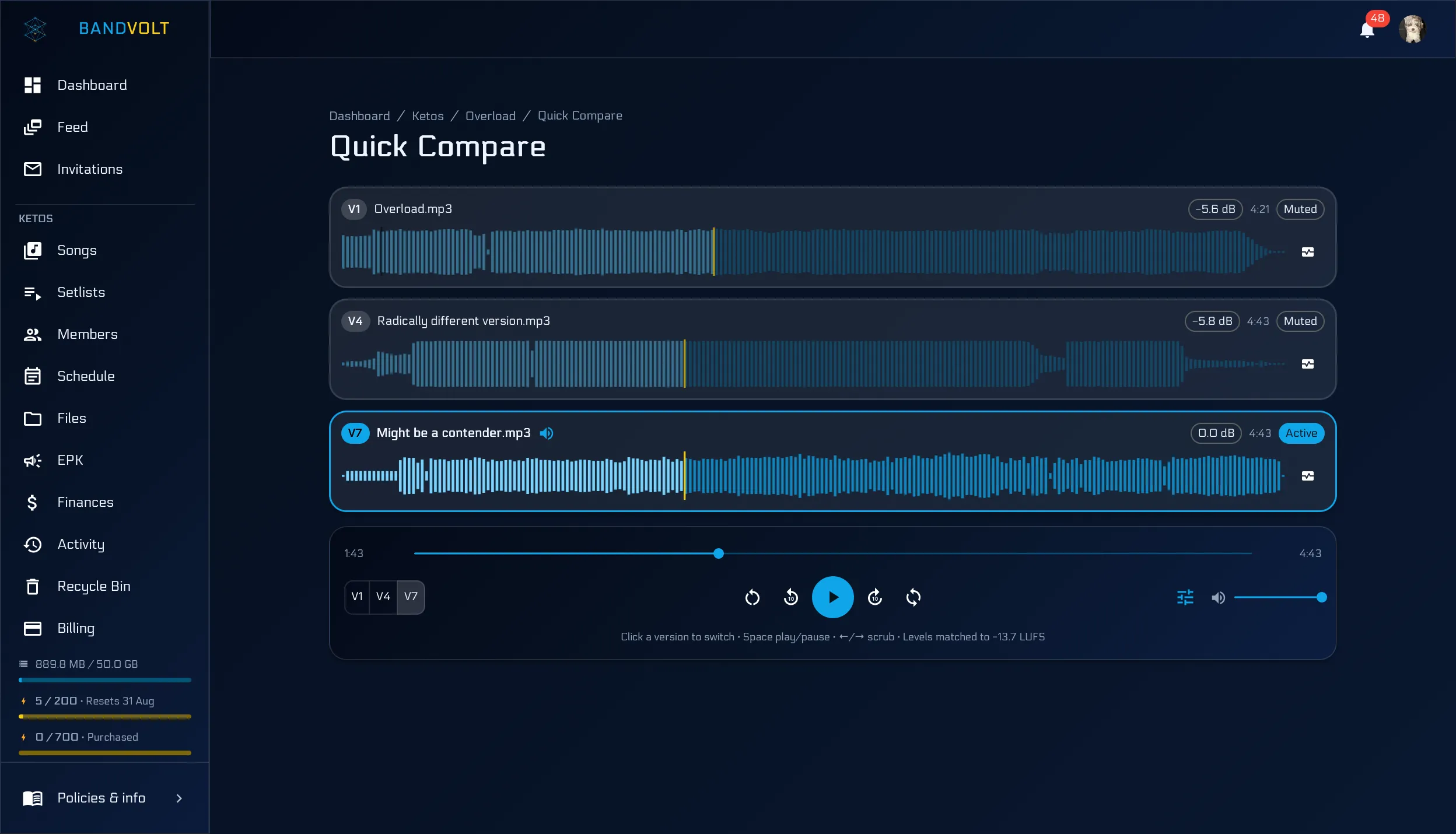
Why the louder bounce always wins an A/B - and how Quick Compare loudness matching levels every version so you hear the mix decisions, not the master bus gain.
Read more →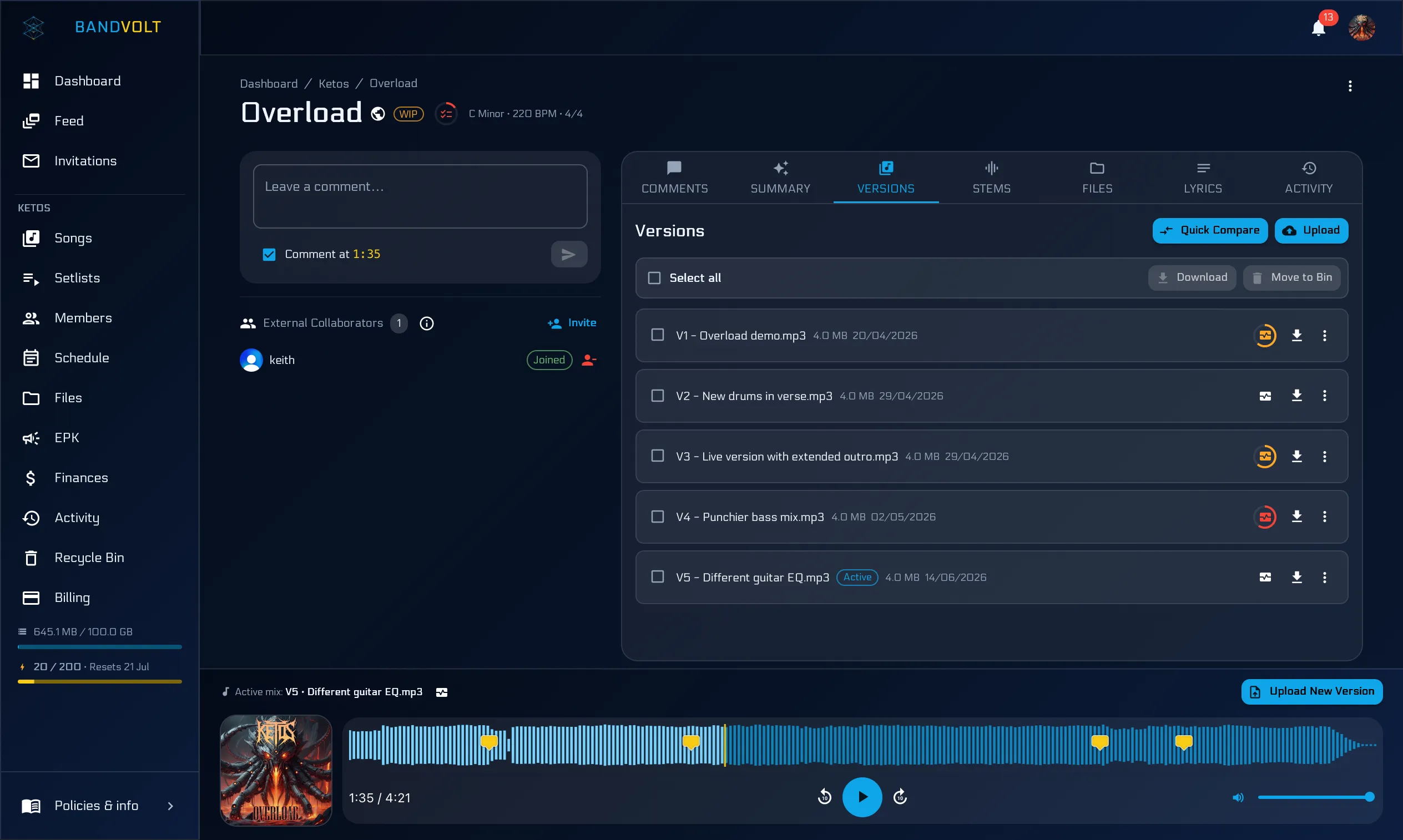
Logic, Ableton, and Pro Tools are where music gets made. A band workspace is where the band decides. Here is where the line sits, why confusing the two slows records down, and how they work side by side.
Read more →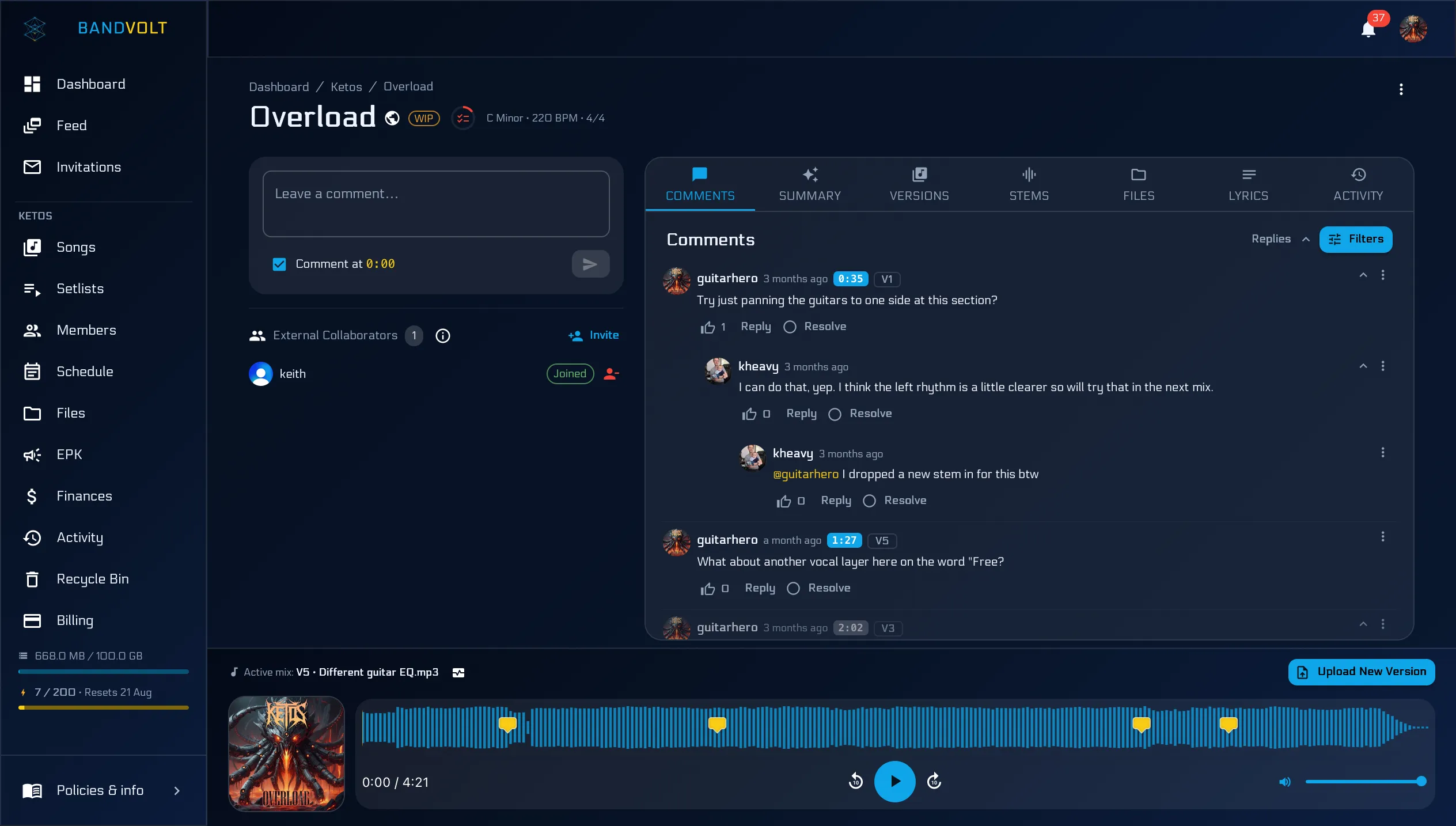
A complete guide for bands - what to listen for, how to describe what you hear without production jargon, how many rounds a mix should take, and how to disagree without stalling the record.
Read more →
A job-by-job guide to building a band's toolkit - what you genuinely need, what you can skip, where the gaps are, and how to avoid paying five subscriptions to solve one problem badly.
Read more →
What goes in a band EPK, what promoters actually read, and how to publish a free Electronic Press Kit on one custom URL - bio, music, photos, videos, booking contact, and upcoming shows.
Read more →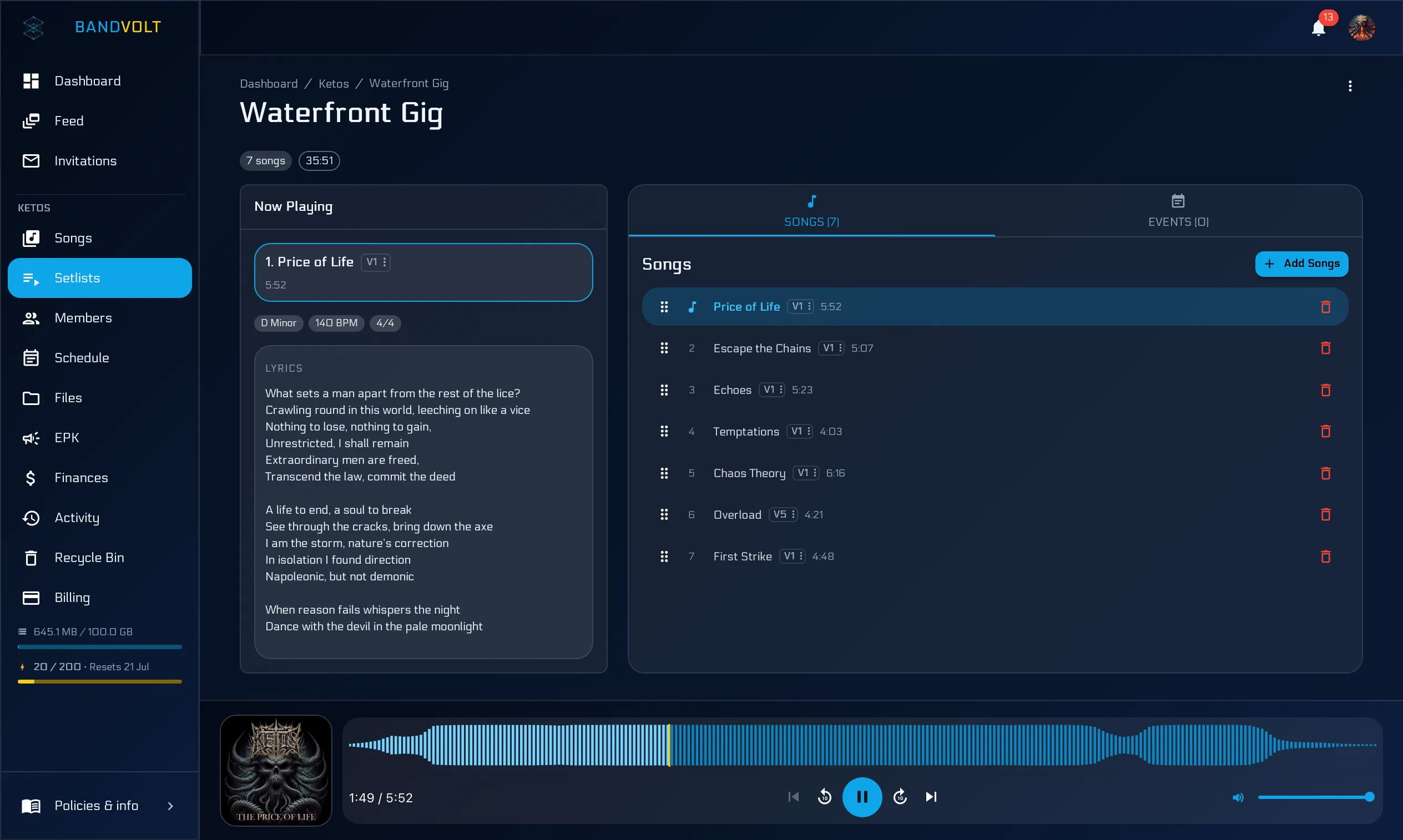
Many bands rehearse to a Spotify playlist. Here is what it can't do - unreleased songs, live arrangements, keys and BPM - and what a purpose-built setlist tool does instead.
Read more → BandVolt setlists can now use any version of a song - album cut, extended live arrangement, or abridged edit - plus unreleased tracks no streaming playlist can hold.
Read more →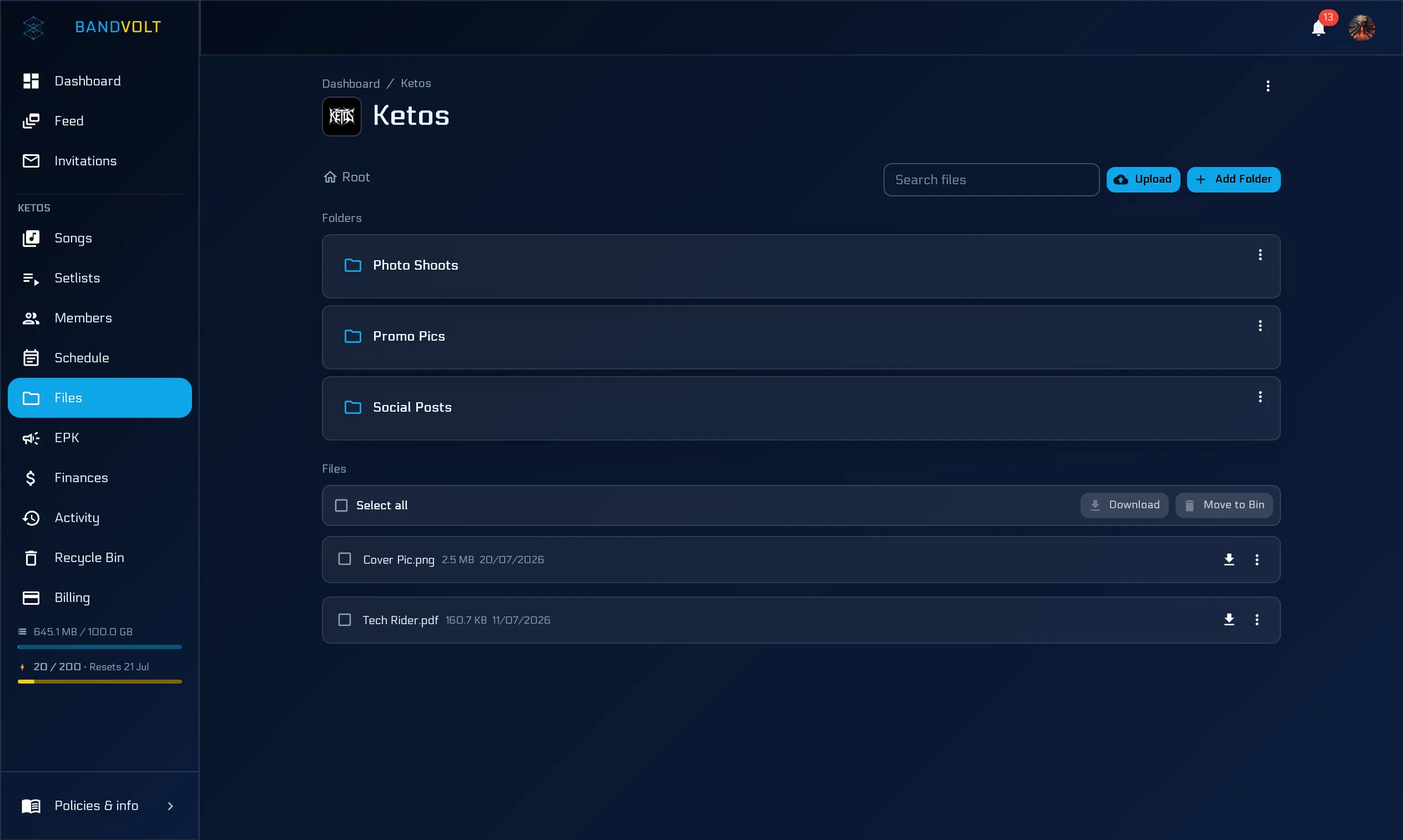
How established bands with a busy gig diary stay tight - setlists built from live versions, tech riders that are always findable, dep-friendly access, and clean books.
Read more →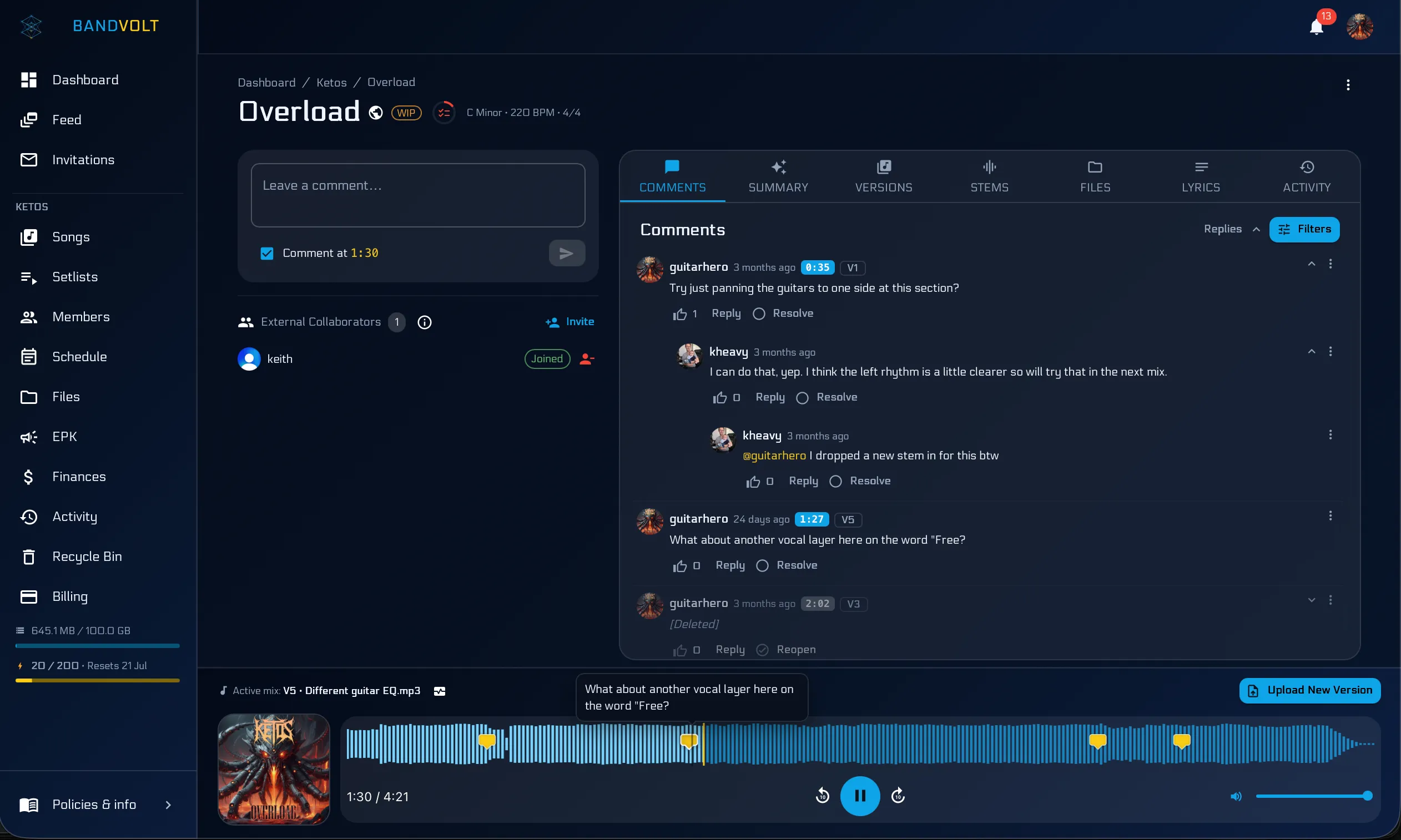
Expiring links, re-uploads after every revision, and no feedback loop - why one-shot file transfers fail ongoing music projects, and what to use instead.
Read more → Voice notes, "the bit after the second chorus", and mixes compressed on send - a side-by-side look at why a group chat fails as a mix review tool, and what timestamped comments do instead.
Read more →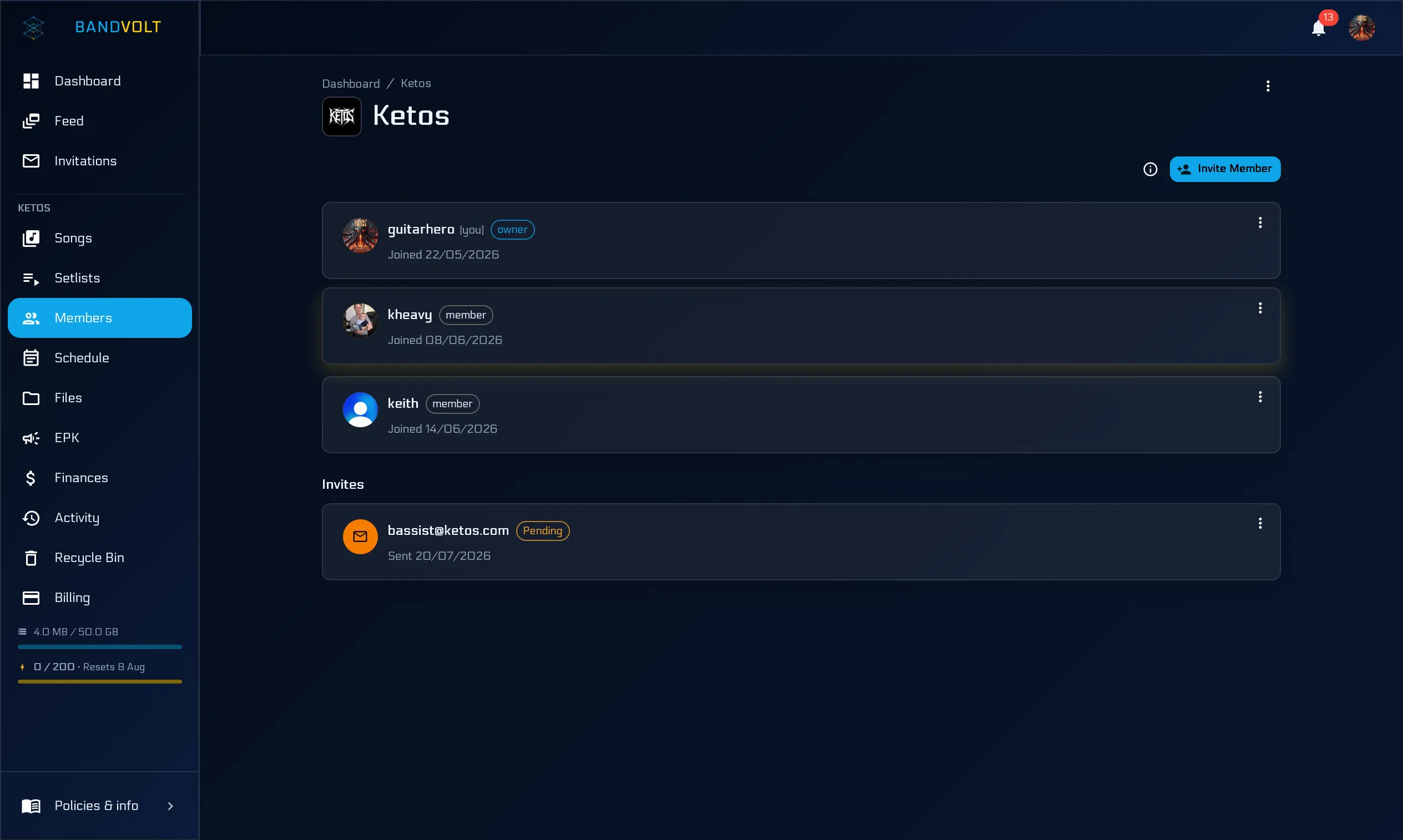
How labels and artist managers keep a roster organised - a workspace per band, version control on mixes, no-signup share links for pitching, and per-band finances.
Read more → One shared login, one person fielding Authenticator requests, folders nobody dares reorganise. Why a shared drive fails bands, what it costs you, and what a band workspace does instead.
Read more →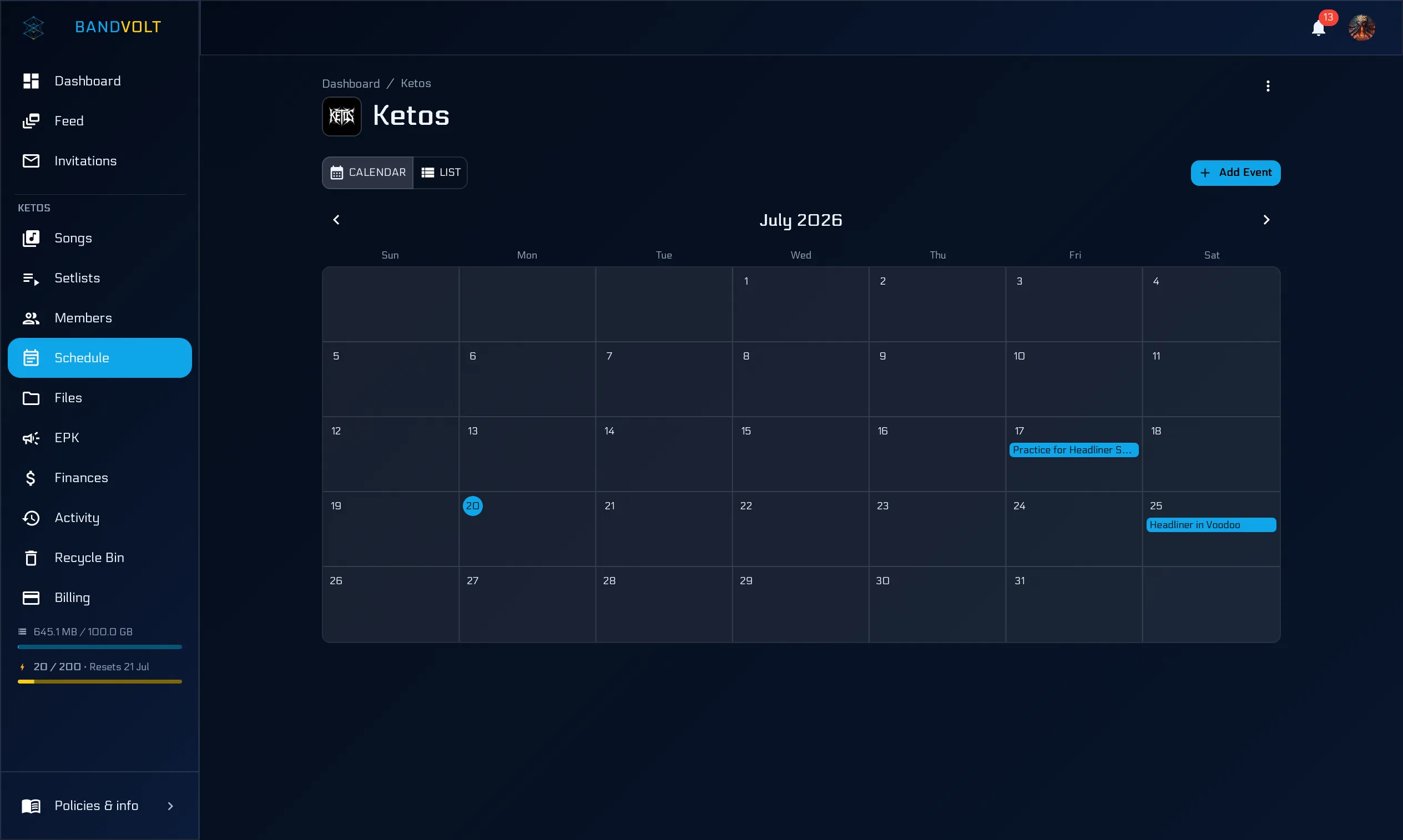
How to organise a worship team - shared setlists per service, keys and BPM on screen, arrangement recordings for rotating volunteers, and a service calendar.
Read more → How to organise an indie band - song versions, feedback, setlists, gigs, money, and sending music to labels - without a manager or a stack of subscriptions.
Read more → Press shots in one inbox, the stage plot in another, the EPK on a laptop that died. Give your band one organised home for the files that aren't music.
Read more → Half the band found out about the show from the venue's Instagram. A shared band calendar fixes the scheduling chaos that kills good bands.
Read more →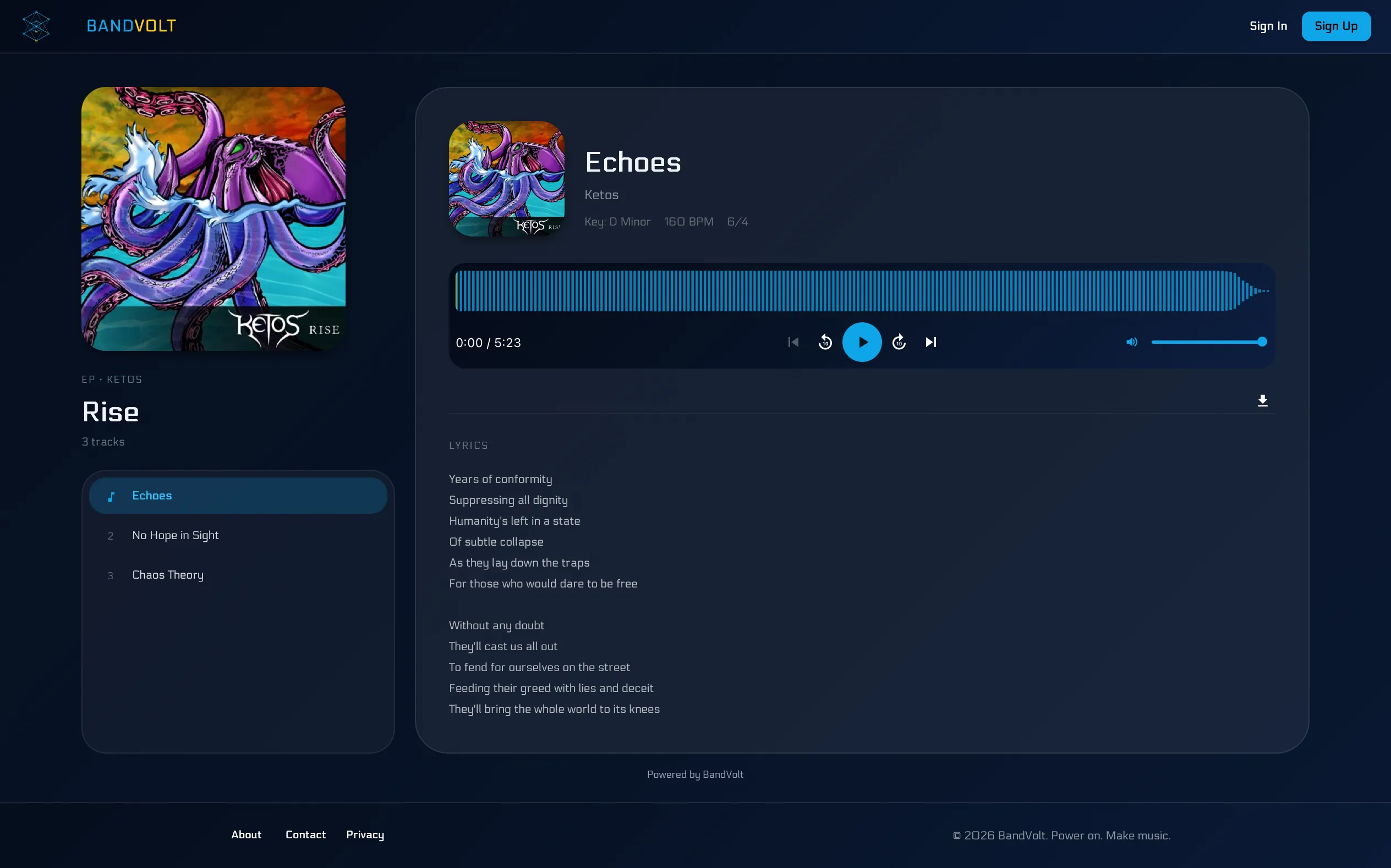
A label, a promoter, your mum. Public share links give anyone a clean page to stream your songs from, without making them sign up for anything.
Read more →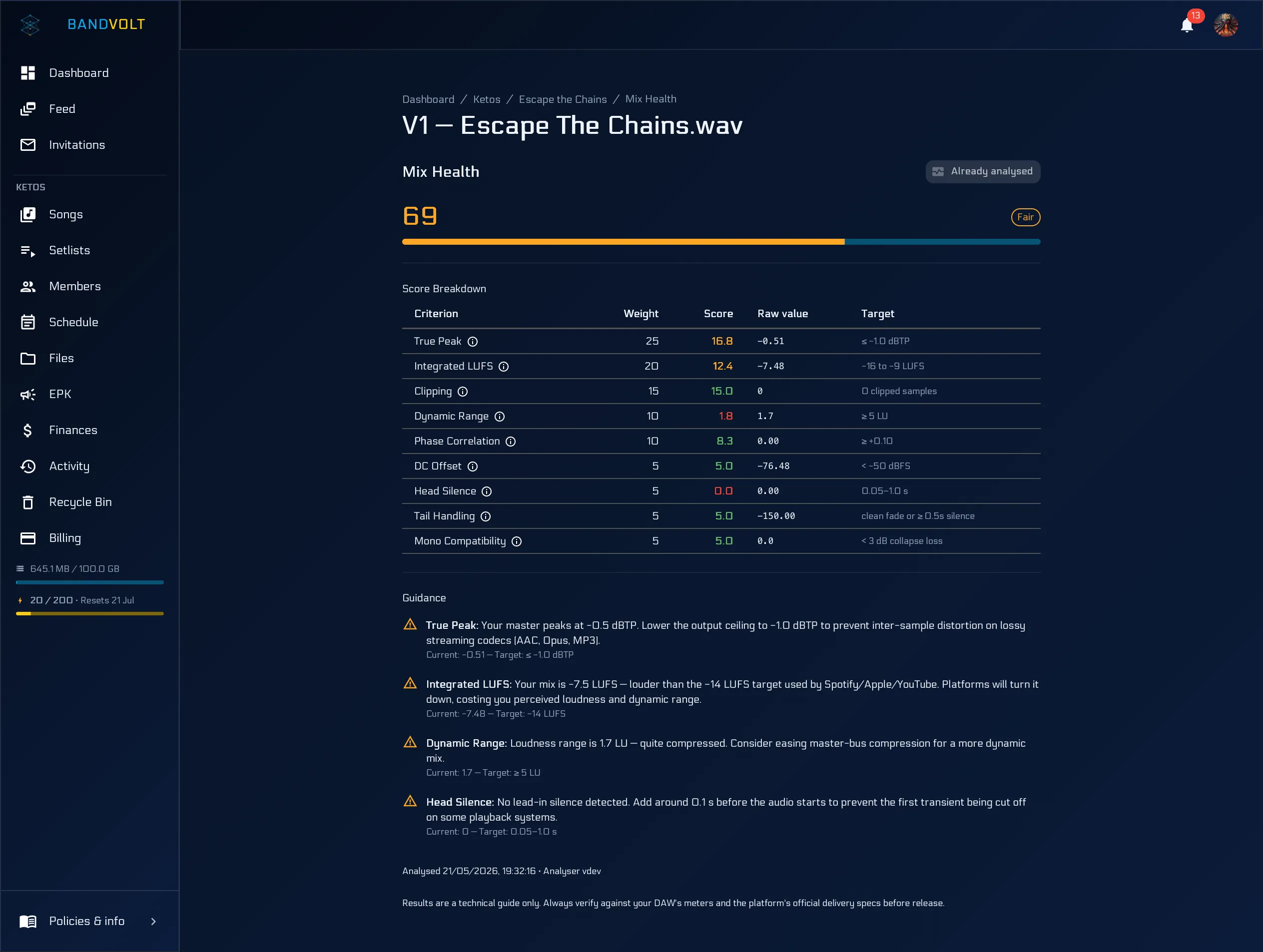
A complete guide to mix readiness for bands - what loudness, true peak, dynamic range, phase, and mono compatibility actually mean, and how to check a mix against all of them before you ship it.
Read more →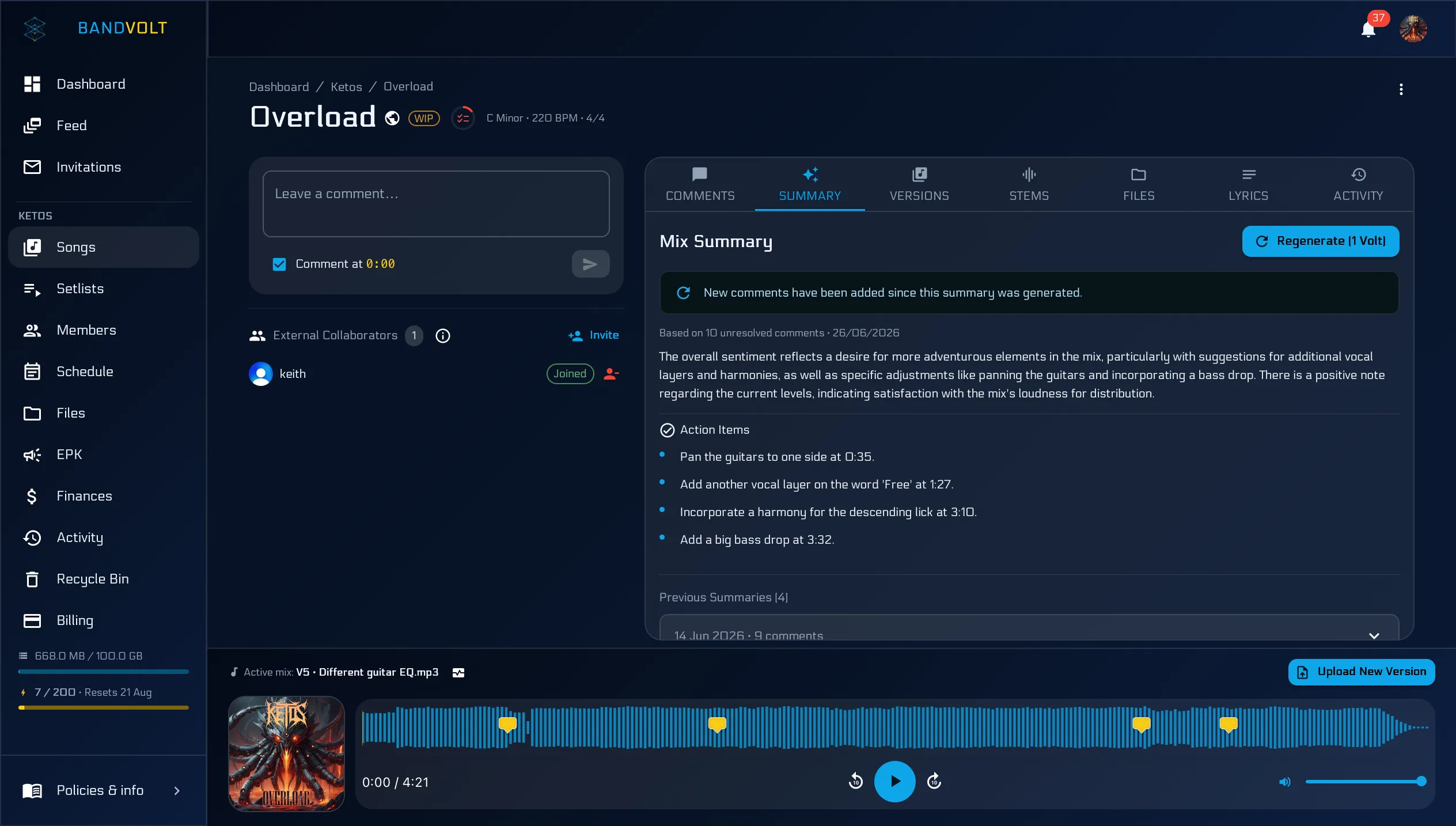
Forty timestamped comments on a mix is a lot to read. AI Mix Summaries turn the noise into a clear list of what to change next.
Read more → A simple, repeatable flow for taking a song from voice memo to released single without losing the thread.
Read more → When the band lives in three cities, the workflow is the only thing keeping the project moving. A practical guide to remote band collaboration - handoffs, deadlines, decision-making, and the tools that hold it together.
Read more → Free tools are not free if the cost is your band's momentum. A look at what bands actually spend on chaos.
Read more → How public share links and external collaborators let you bring in session musicians, producers, and labels without giving them an account.
Read more →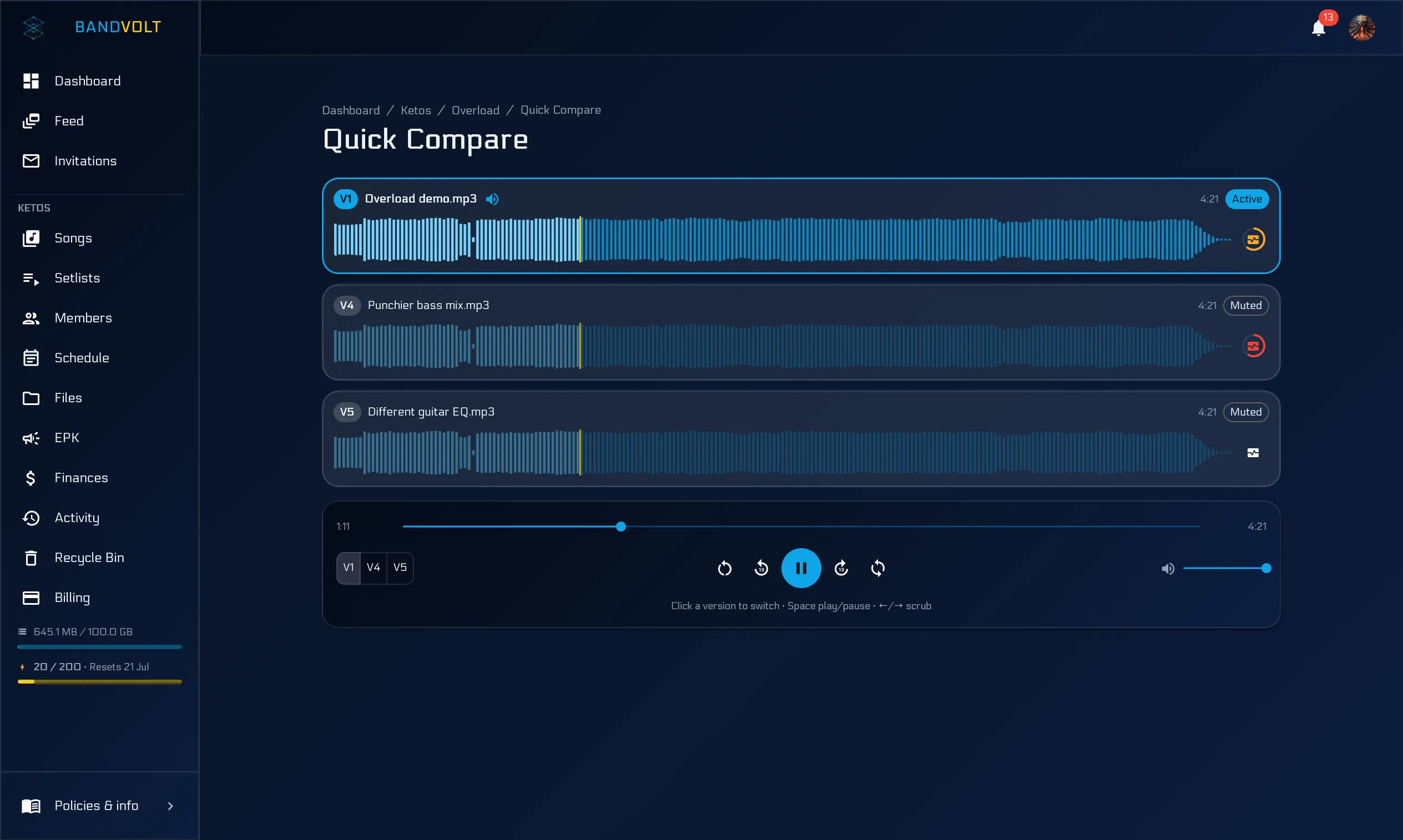
How to A/B two mix versions properly - why level matching and switching at the same playback position matter, and how to turn "it sounds different" into a note a producer can use.
Read more →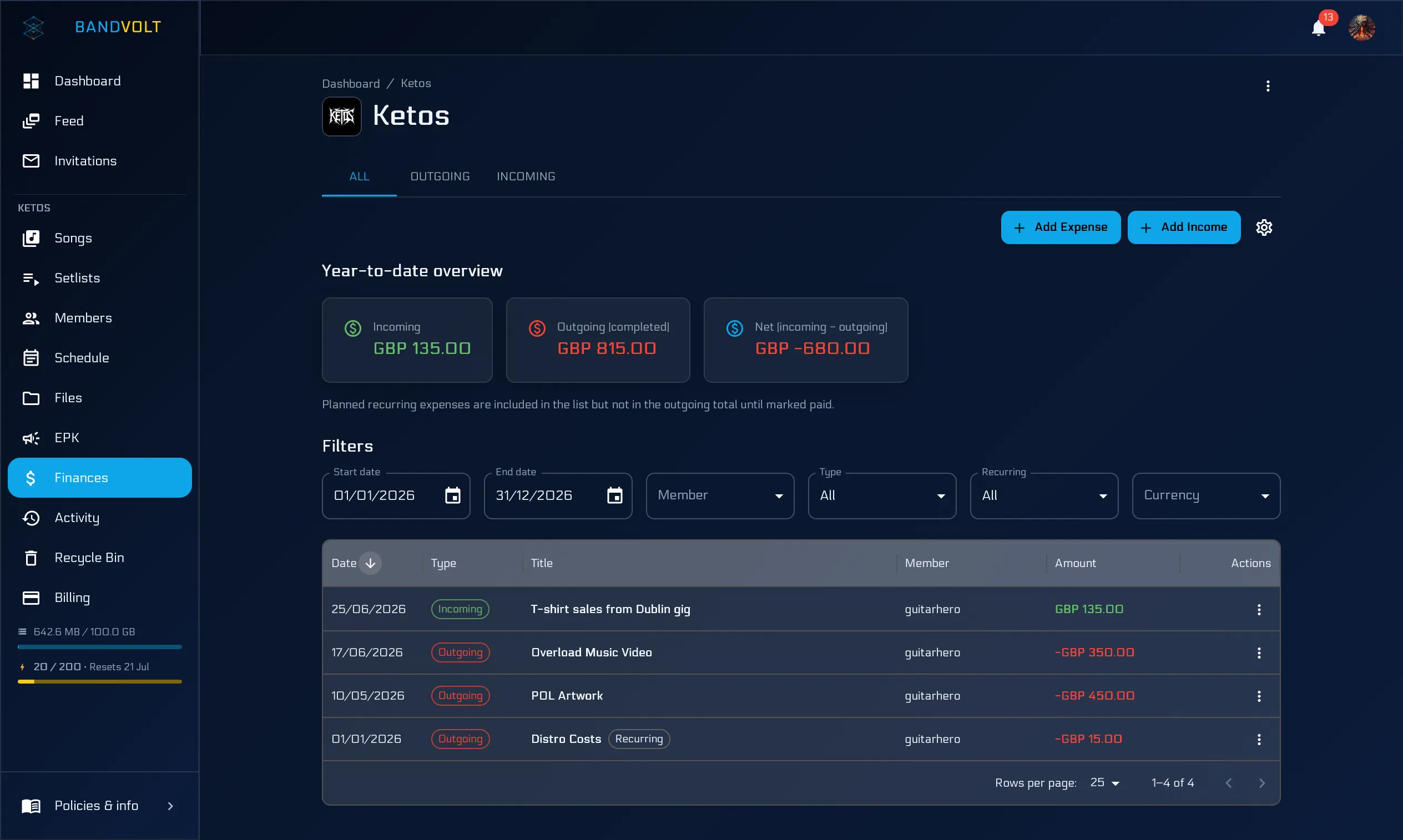
How bands actually split gig money - even splits, expenses-first, and points systems compared - plus why a shared ledger turns Sunday afternoon negotiations into a five-minute glance.
Read more → How to build and share a setlist without the spreadsheet - sequencing a set that works, keeping the live arrangement rather than the album cut, printing a stage sheet, and keeping one current version everyone can see.
Read more → "Tighten the verse" is useless. "0:39 - the triplets feel rushed" is a fix. A full guide to giving mix notes your band can act on, and the tooling that makes specificity easy.
Read more → A complete guide to mix version control for bands - why file naming always fails, what a real version history looks like, and how to keep every mix findable, comparable, and clear.
Read more → Why most band ideas die in the group chat - and how to stop losing the good ones to scroll.
Read more → The story behind BandVolt - solving the real problems bands face when collaborating on music, from first demo to show night.
Read more → Introducing BandVolt - the all-in-one workspace where bands write songs, review recordings, manage setlists, and stay in sync.
Read more →