

The gig nobody put in the calendar
Half the band found out about the show from the venue's Instagram. A shared band calendar fixes the scheduling chaos that kills good bands.
By @KHeavy
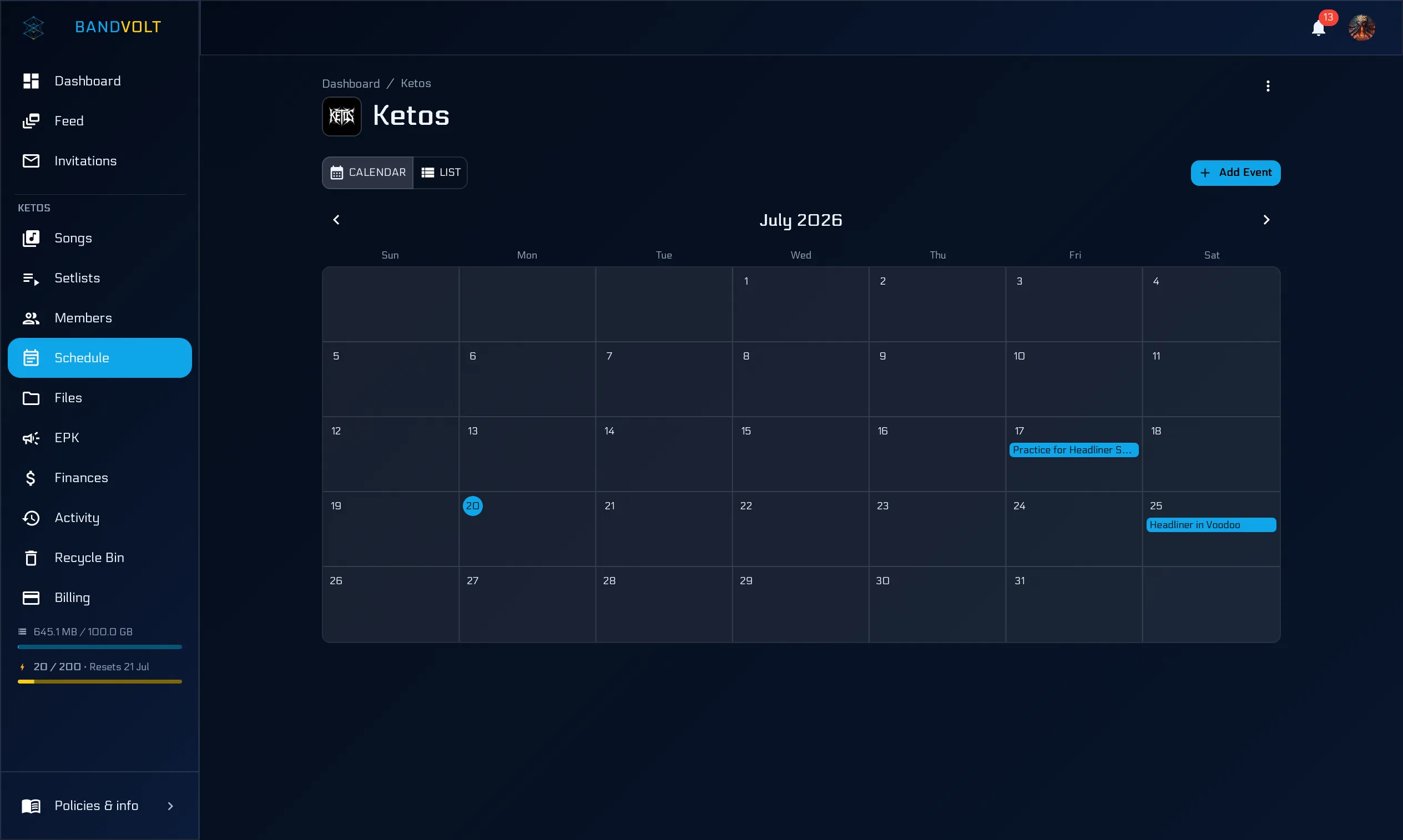
Every band has a version of this story. The gig got booked in a DM. The booker confirmed it in an email to one person. That person mentioned it in the group chat, somewhere between a meme and a question about strings. Three weeks later the drummer books a weekend away.
Nobody did anything wrong. There was just no place where the gig officially existed.
One calendar, the whole band
BandVolt gives every band a shared calendar. Create a gig, a rehearsal, or a studio session and every member sees it - same calendar, same dates, no forwarding.
The difference between “I told everyone” and “everyone can see it” is the difference between a band that double-books and a band that doesn’t.
Events carry their own kit
An event on the calendar is not just a date. Attach the setlist for that show directly to it. Attach files too - the stage plot, the parking instructions, the contract PDF the venue sent.
The night before the gig, nobody is asking what time load-in is or which set you are playing. They open the event. It is all there. (The setlist itself takes about five minutes to build.)
Rehearsals count too
Calendars are not just for show night. Put the Tuesday rehearsal on there, attach the setlist of songs you are working on, and the whole band walks in knowing what is getting played. Less “what shall we run first?”, more running it.
Stop being the band’s PA
If you are the organised one, you know the job: chase, remind, re-send, repeat. A shared calendar retires that role. The information lives in one place that everyone checks, instead of in your patience.
Topics: band rehearsal scheduling app · shared band calendar · gig calendar