

What to put in a band EPK (and what promoters actually read)
What to include in a band EPK, how promoters actually use one in the ninety seconds they give it, how to write the bio, and a checklist to run before you send the link.
By @KHeavy · Updated 26 October 2026
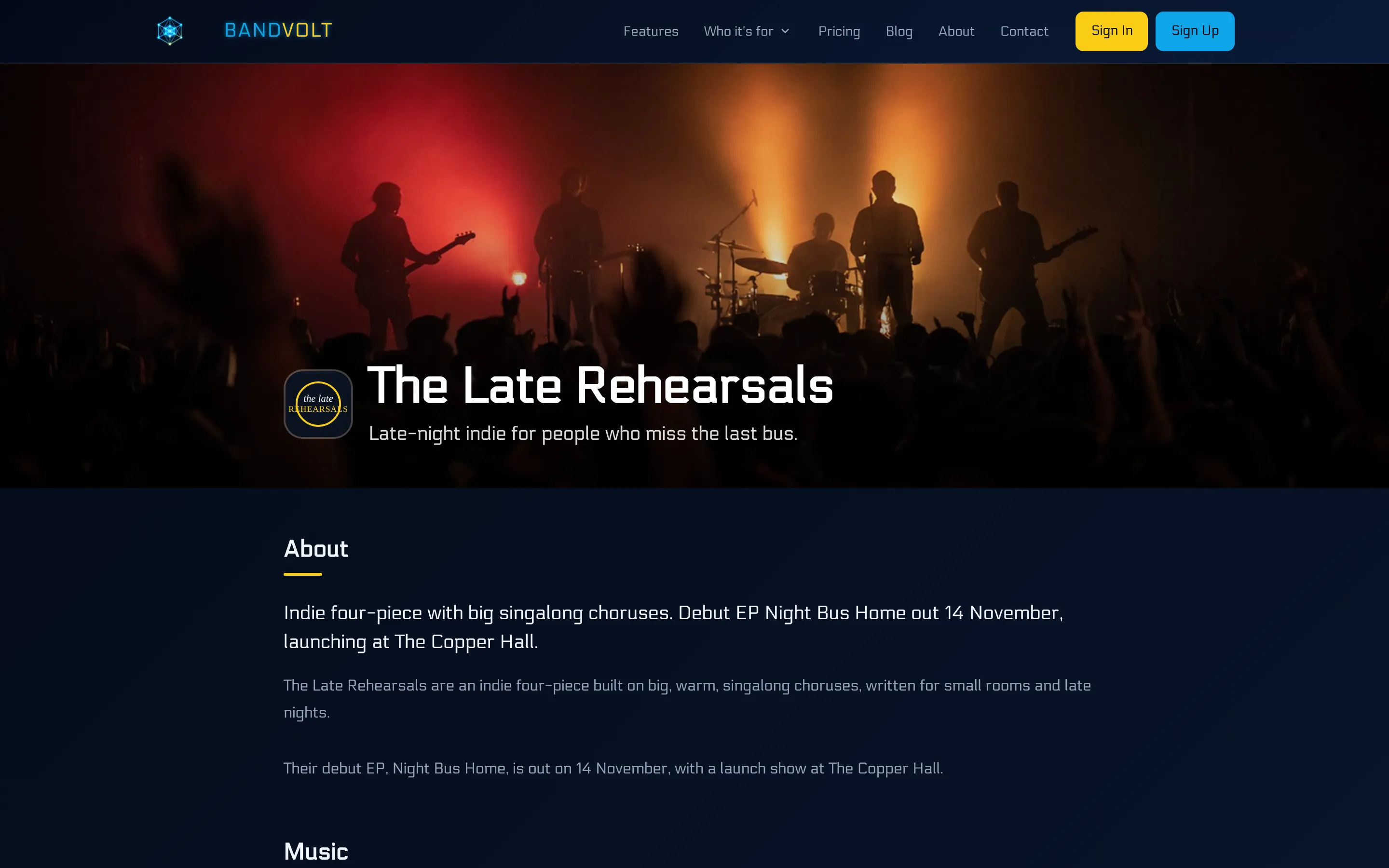
A promoter asks for your EPK. You have a bio in a Google Doc, press shots in someone else’s Drive, the stage plot in an email from last year, and a SoundCloud link that may or may not still play. By the time you have zipped it together, the booking conversation has moved on.
The short answer: a band EPK is one online page with a short bio, two or three tracks that play straight away, a press shot, live video, links, upcoming shows, and one booking contact. A promoter gives it about ninety seconds, so the music goes first. BandVolt’s free EPK maker puts that page on one public link.
What a promoter actually does with your link
A promoter booking a support slot has maybe fifteen bands to look at and about ninety seconds for each. They are answering three questions, in this order:
- What do they sound like? Not the genre you claim. What it sounds like when the first chorus arrives.
- Can they draw, and can they play? Live video, past shows, anything that suggests you have done this before.
- How do I book them, and will they reply? One contact, obviously placed.
Anything on the page that does not help with those three questions is decoration. The most common mistake is burying the music under four paragraphs of formation history.
What goes in a band EPK
Your press kit is a page, not a folder of files:
- Story - band name, logo, tagline, and a bio you write (or draft, then edit)
- Music - two or three featured tracks that play straight away
- Photos and video - one strong press shot, plus live video if you have it
- Booking - one contact, social links, and upcoming shows that are actually upcoming
- A link - one URL you can send, your-band.bandvolt.com/epk. Publish when it is ready. Take it offline when you need to. Your band EPK link is where to find it and copy it.
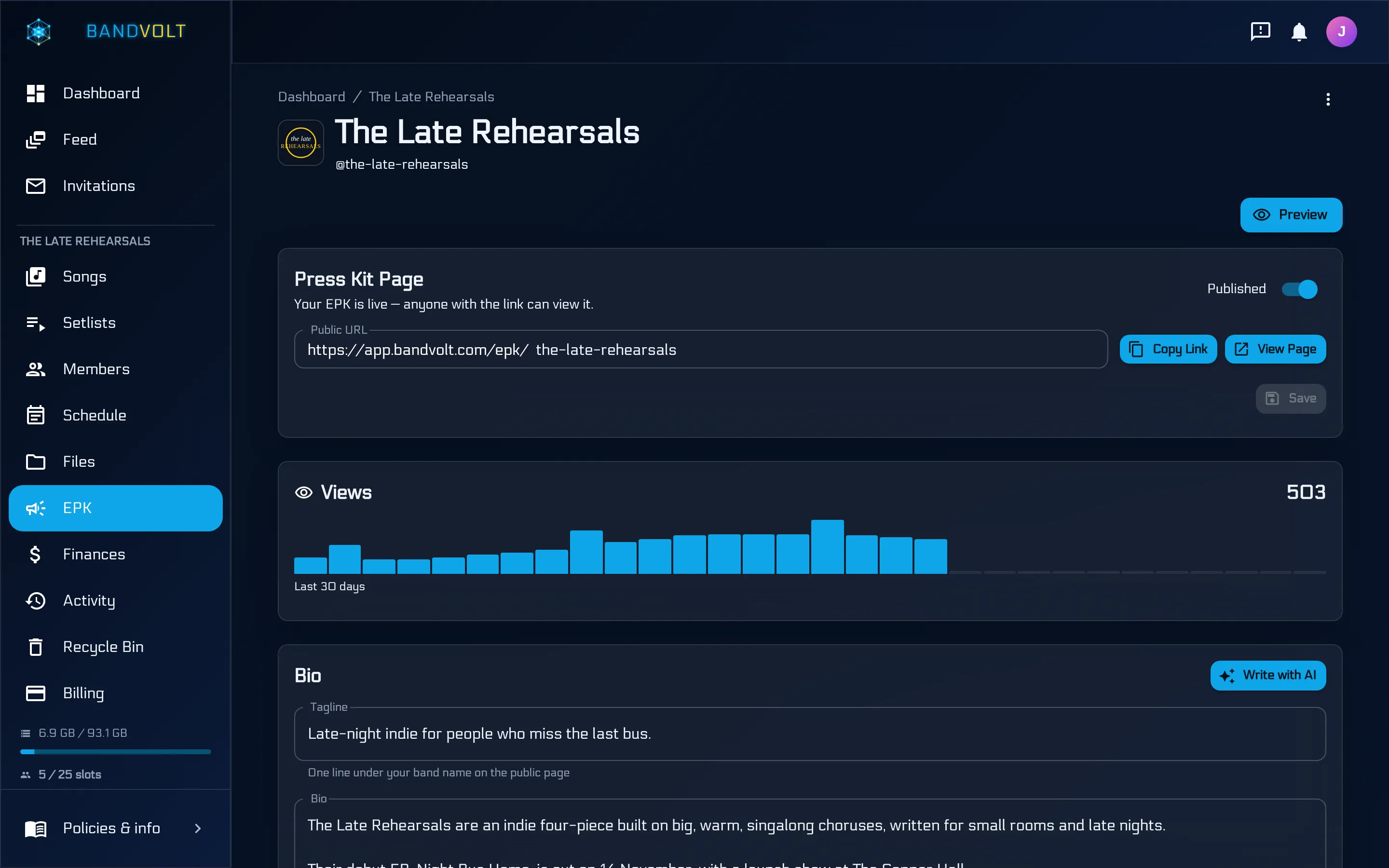
In BandVolt those pieces come from the band workspace: featured tracks from the song library, with a waveform player, a photo gallery, YouTube videos, press quotes, and shows from the gigs you flag on the calendar. The free EPK maker is where that page is built. The click-by-click is how to make a free EPK.
Cost, website or PDF
Send a link to an online page, not a PDF that goes stale in old inboxes. What the page costs in BandVolt is in how much does an EPK cost. The EPK maker page is where that page is built. How the free makers compare, including what is actually free, is in free EPK makers compared.
Writing the bio
This is the part that stops bands. Three short paragraphs, shortest first.
The hook (one or two sentences). What you sound like and where you are from. A concrete comparison beats an adjective. “Somewhere between early Idles and a Belfast pub lock-in” tells a promoter more than “energetic alternative rock”.
The evidence (two or three sentences). Releases, notable shows, support slots, radio play, anything a stranger can check. This is the section most bands leave out because it feels like bragging. On a press page it is the point.
The now (one or two sentences). The new single, the dates, what you are working on. This is the paragraph you will change most often, so keep it easy to swap.
Write a short version and a long version. The short one gets pasted into listings by people who will not ask first, so make sure the version they find is one you are happy with.
The photo
One good high-resolution press shot beats twelve phone photos. Landscape, because that is the shape of the listings and banners it will end up in. If you have to choose between an artful shot where nobody’s face is visible and a plain shot where the band looks like the band, take the plain one. A promoter is trying to recognise you at load-in.
How it stays current
The press kit sits in the same workspace as your versions, setlists, files and calendar. Featured tracks are tracks you already keep. Upcoming shows are gigs you flag, not a list you retype into a separate EPK folder.
That is why most press kits go stale. Updating them is a chore nobody owns. When the shows come from the calendar you already use for rehearsals, the page keeps up with work you were doing anyway. When the story changes, you edit the bio once, and everyone with the link sees it.
A share link is a different job. A song link, or a full album or EP link on Premium, is for “have a listen to this”. The guide is how to send your EP to a label. The EPK introduces the band. It is not a sequenced release page.
A pre-send checklist
Before you send the link to anyone who matters:
- The first track plays within a couple of seconds of the page loading
- The short bio is genuinely short
- There is one obvious booking contact, and somebody checks that inbox
- The press shot is high resolution and landscape
- Upcoming shows are current, or the section is empty rather than showing last year
- You have opened the link yourself, on a phone, logged out
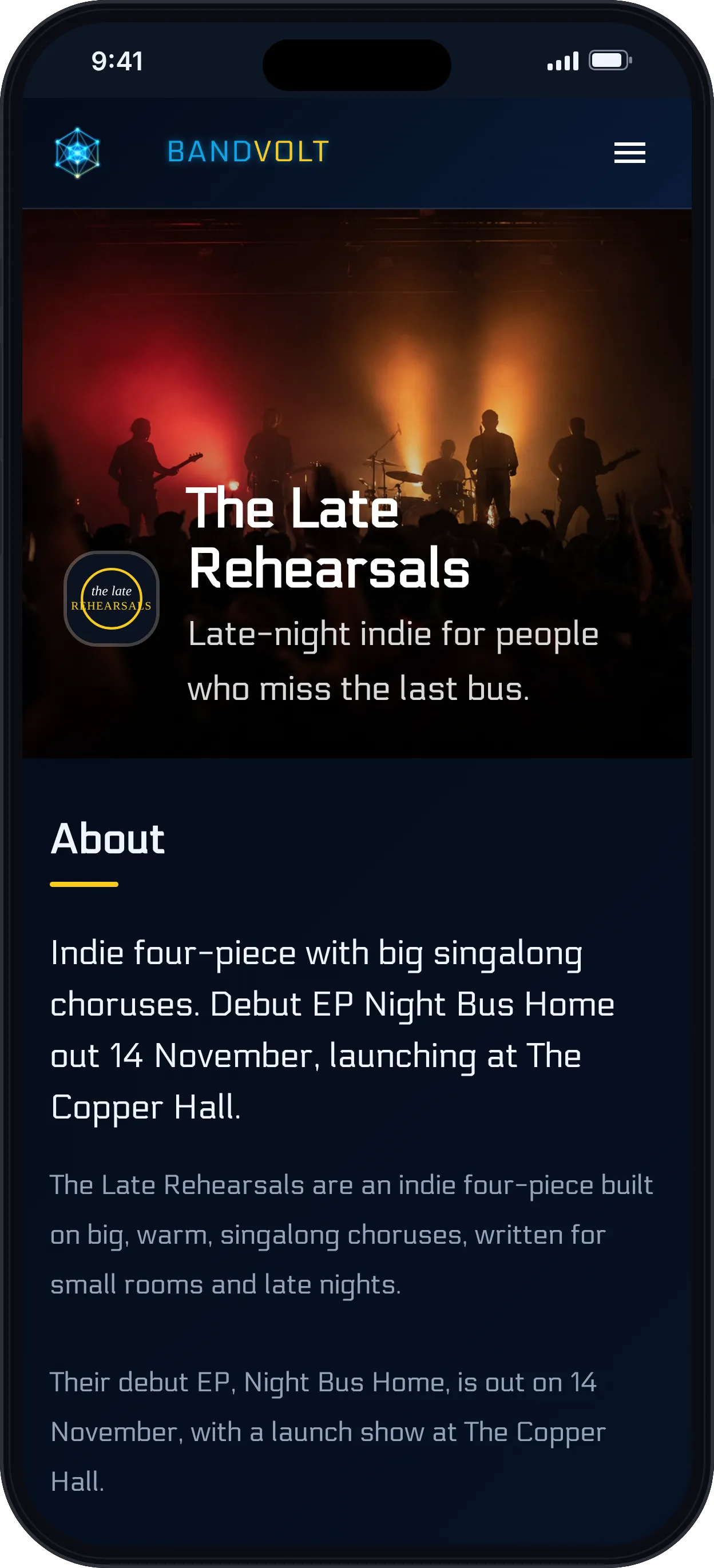
That last one catches more problems than the other five combined.
Make the page, then get on with the gig
Promoters want something they can skim: who you are, how you sound, how to book you. The free EPK maker builds that page in your band workspace. Free on every tier. No website to run, and no PDF to keep sending again.
When you are ready, sign up free and publish your press kit.
Frequently asked questions
What is an Electronic Press Kit (EPK)?
An EPK is a single web page that introduces your band to a promoter, a booker, a journalist or a playlist curator. It carries your bio, music, photos, videos, links and booking contact in one place, so nobody has to chase you for attachments.
What should a band EPK include?
A short bio with a one-line hook, two or three tracks that play straight away, a high-resolution press shot, live video if you have it, social links, upcoming shows, and one booking contact. Anything a promoter cannot use in the next five minutes is optional.
How long should a band bio be?
Write two. A short one of roughly 50 words that a promoter can paste straight into a listing, and a longer one of 150 to 250 words for press. Lead with what you sound like and what you have actually done, not with the year you formed.
Topics: what to put in an EPK · band EPK template · EPK · band press kit